About
Design is not what I do.
It is how I think.
For thirty years, across four continents, I’ve practised design, united by a single belief: the best design starts with understanding people.

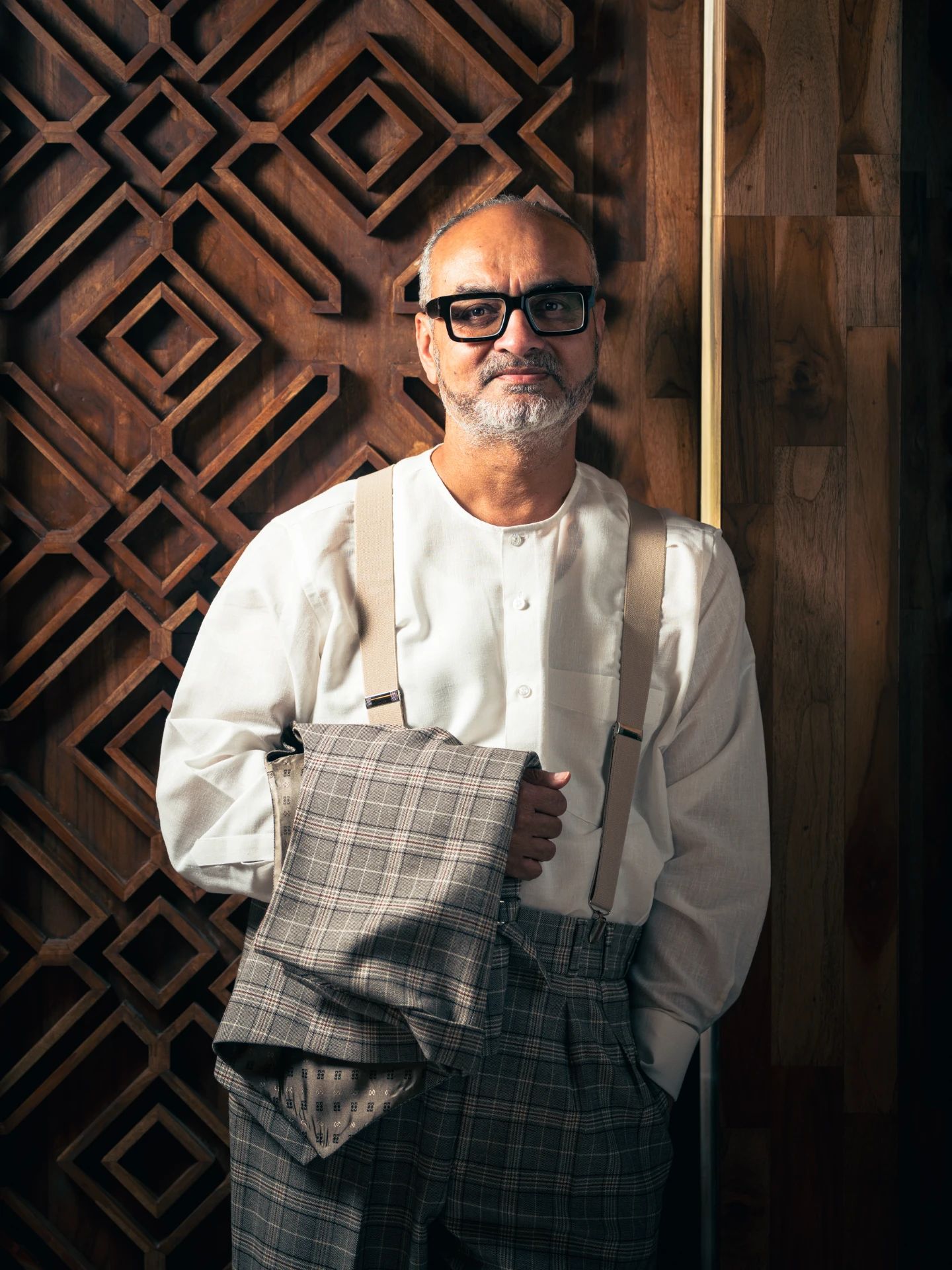
About
For thirty years, across four continents, I’ve practised design, united by a single belief: the best design starts with understanding people.
The Person
Brand strategy and spatial design are rarely practised together and identity systems and immersive technology even less so. However, for me that intersection isn’t a source of tension but rather a place where the most exciting work happens.
I started my career in India, trained at M.S. University of Baroda and studied Human Computer Interface Design at IIT.
What I learned there was not just craft. It was a way of seeing, that design is never about the object or the surface. It is always about the person on the other side of it.
That belief has carried across every country I have worked in, every sector I have designed for, and every brief I have led. The context changes. The commitment to understanding people before making decisions about design never does.
The practice has changed. The conviction has not.
The Approach
Every engagement follows the same logic, regardless of scale or sector.
1
It begins with research. Not desk research, but the kind that surfaces the real needs behind the brief.
I use Jobs to be Done frameworks, assumption mapping, and behavioural design methods to understand what people actually need, not just what they say they want.
2
Strategy emerges from that intelligence. It encompasses creative direction, spatial logic, identity system and experience architecture, all firmly rooted in evidence before any design begins.
3
Design is the final step, not the first. This discipline distinguishes work that endures over time from work that merely appears aesthetically pleasing at the time of delivery.
This isn’t just a tagline; it’s a description of how every project is run: research-driven, strategy-led and inclusive by design.
The Network
Rehan personally leads and designs every aspect of every project, encompassing the entire connected experience.
This includes brand strategy and identity, spatial and interior design, furniture and industrial design.
The creative direction and design authorship span all disciplines from the initial research session through to final delivery.
Across physical, digital and experiential mediums, the strategic and creative intelligence behind UX and behavioural design, environmental experience and wayfinding, immersive technology and XR remains singular and consistent regardless of the brief.
For projects requiring specialist execution, Rehan relies on a trusted network of craftspeople and makers. This includes carpenters, CAD drafters and manufacturing partners across Asia and Europe who bring his designs to life.
This encompasses everything from custom furniture and lighting to architectural joinery and product fabrication.
While the design remains his, the making is always entrusted to the best person for the job.
The Credentials
Rehan trained at M.S. University of Baroda and IIT, and has spent three decades leading design at an international level across hospitality, cultural institutions, brand consultancies, infrastructure, and retail.
Storm Worldwide Design is the independent practice that consolidates all of that experience under a single point of view, working across four continents with clients spanning hospitality, retail, governance, technology, and financial services.
The practice has received over twenty international awards including recognition at the Cannes Corporate Media and TV Awards and Creativity International. The work has been published in more than twenty design volumes worldwide.
Contact
Every project starts with a conversation.
Whether you have a prepared brief or an idea still forming, the initial conversation is always the most crucial.